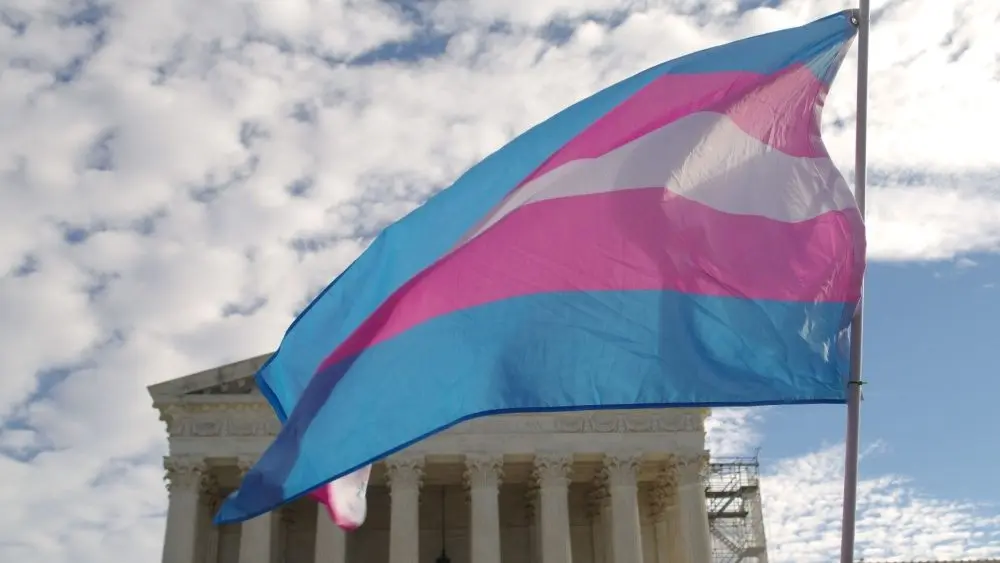
The Supreme Court on Tuesday appeared inclined to uphold laws in Idaho and West Virginia that prohibit transgender girls and women from competing on female school and college sports teams, signaling another potential setback for transgender rights nationwide. A final decision is expected later this year, and could determine how far states may go in regulating transgender participation in athletics across the country.
The bans at issue are part of a broader national trend, with at least 25 other states have enacting similar restrictions, meaning the court’s eventual ruling could have wide-reaching effects.
During more than three hours of oral arguments, the justices considered challenges brought by two transgender athletes — Becky Pepper-Jackson of West Virginia and Lindsay Hecox of Idaho — who argue that the bans violate the Constitution’s equal protection guarantee and Title IX, the federal law barring sex discrimination in education. Both athletes previously secured lower-court rulings allowing them to compete while litigation continued. Pepper-Jackson, now 15, competes in shot put and discus and previously ran cross-country. Hecox, 25, sought to compete in track and cross-country at Boise State University but did not make the teams; she later participated in club soccer and running. Hecox has since asked the court to dismiss her case as moot after deciding to stop playing sports covered by Idaho’s ban, citing fear of harassment, though state lawyers say the dispute remains live.
The court’s questioning suggested a majority was skeptical that the laws unlawfully discriminate. Several justices focused on Title IX’s Javits Amendment, adopted in 1974, which expressly permits sex-based distinctions in athletics. Conservative members of the court repeatedly emphasized biological differences between males and females and their relevance to competitive sports. Justice Brett Kavanaugh said “obviously, one of the great successes in America over the last 50 years has been the growth of women’s and girls’ sports. And it’s inspiring,” while adding that many institutions believe transgender participation could undermine those gains.
Idaho and West Virginia argue their statutes regulate sports based on biological sex, not gender identity, and are designed to preserve fairness and safety for female athletes. As Idaho officials wrote, “men are faster, stronger, bigger, more muscular, and have more explosive power than women;” with Idaho Solicitor General Alan Hurst telling the court, “if women don’t have their own competitions, they won’t be able to compete,” and said sex “correlates strongly with countless athletic advantages, like size, muscle mass, bone mass and heart and lung capacity.” West Virginia Solicitor General Michael Williams described the legal challenge as a “backdoor attack on Title IX,” warning that redefining eligibility around gender identity would reverse a law enacted to expand opportunities for girls.
The Trump administration has supported the states. Justice Department lawyer Hashim Mooppan argued that “Denying a special accommodation to trans-identifying individuals does not discriminate on the basis of sex or gender identity or deny equal protection,” even if transgender athletes use hormone treatments.
The cases arrive as the Supreme Court’s conservative majority has repeatedly ruled against transgender rights. Last year, it allowed states to ban gender-affirming care for minors and upheld Trump-era policies barring transgender people from the military and restricting passport sex designations. Those decisions contrast with a 2020 ruling extending workplace protections under Title VII to gender identity and sexual orientation — a precedent some questioned whether the court would apply to Title IX.
Editorial credit: Philip Yabut / Shutterstock.com